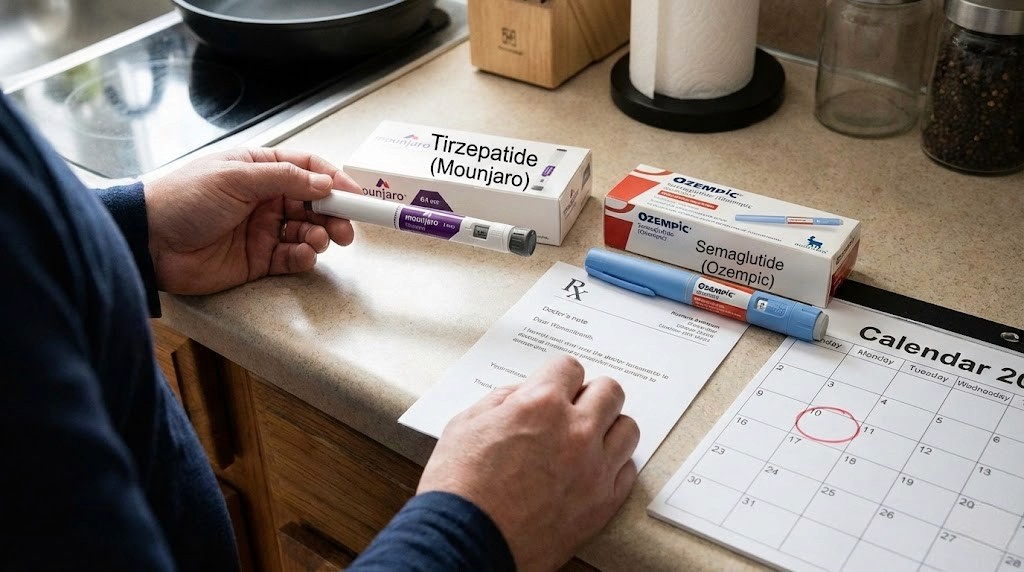
Preparation (before injection): Remove the Ozempic pen from the refrigerator 1530 minutes before use to allow it to reach room temperature, which reduces injection discomfort Wash hands thoroughly with soap and water Check the medication label, expiry date, and that the solution is clear and colourless (do not use if cloudy or discoloured) Attach a new needle to the pen for each injectionnever reuse needles or share your pen with others Perform a flow check (prime) before the first injection with a new pen as per the manufacturer's instructions to ensure the pen is functioning correctly Selecting and preparing the injection site: Choose your injection area (abdomen, thigh, or upper arm) and identify a specific spot within that area Ensure the skin is clean and dryroutine use of alcohol swabs is not necessary for patients with good hygiene, though some may prefer this Avoid areas with visible veins, bruises, scars, or skin abnormalities Administering the injection: Gently pinch a fold of skin between thumb and forefinger to lift the subcutaneous tissue away from underlying muscle (this may not be necessary with 4 mm needles unless you are very lean) Insert the needle at a 90-degree angle (or 45 degrees if you have very little subcutaneous fat) with a quick, dart-like motion Press and hold the dose button until the dose counter shows "0", then continue holding for at least 6 seconds to ensure complete delivery Release the skin fold and withdraw the needle straight out Do not rub the injection site, as this may affect absorption After injection: Carefully remove and safely dispose of the used needle in a sharps containernever recap needles Replace the pen cap and store the pen as directed (before first use: refrigerate at 28C, do not freeze

These services should be accessed before or alongside pharmacotherapy
Across the subgroups of patients with different baseline cardiovascular conditions, mean age ranged from approximately 59 to 67 years, baseline BMI from 33.8 to 36.3 kg/m 2 , and baseline type 2 diabetes prevalence from 25.4% in aortic disease to 50.8% in heart failure, with broadly balanced matching across the individual subgroups (Table 2)